


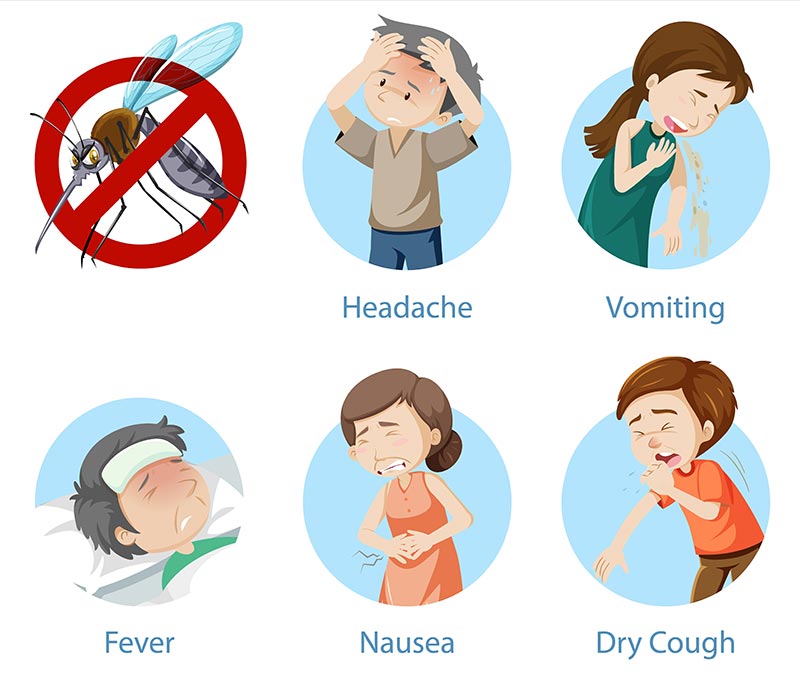
Dengue Hemorrhagic Fever is a disease most commonly occurring during the rainy season, specifically between May and September. This illness can affect any age group, regardless of gender, but it is most frequently found in children between the ages of 5 and 14 years.
Transmission of the Disease
The Dengue virus is transmitted from one person to another via the Aedes Mosquito.
- Biting Time: The mosquito that causes Dengue typically bites during the daytime.
- Breeding Sites: They usually lay eggs and breed in clean water that is stagnant, or in water tanks and containers that are not securely covered.
Stages of Symptoms
The symptoms of Dengue Hemorrhagic Fever tend to progress through the following four stages:
Stage (1): Febrile Phase (High Fever Stage)
- Sudden onset of high fever
- Severe headaches and intense body aches/pains
- Loss of appetite
- Red spots (rash) appearing on the skin of the arms and thighs
- Nausea and vomiting (some may vomit brown fluids)
Stage (2): Mild Hemorrhagic Signs
- Nosebleeds
- Bleeding from the gums
- Blood in the stool or bloody diarrhea
Stage (3): Critical Phase / Early Shock
- The patient’s pulse becomes weak and rapid
- Hands and feet become cold
- The skin appears pale and the patient feels generally unwell (malaise)
Stage (4): Severe Shock
- Blood pressure drops severely, making it difficult to measure
- Loss of consciousness or reaching a life-threatening condition
Important Warning: The period between 2 and 7 days from the onset of the illness is extremely critical. Delayed treatment during this period can be life-threatening.
Required Management When Infected
As soon as Dengue Hemorrhagic Fever is suspected, seeking medical treatment early is the safest course of action for the patient. While caring for the patient at home, do the following:
- Hydration: Drink plenty of water, Oral Rehydration Solution (ORS), or fruit juices.
- Fever Reduction: Frequently wipe the patient down with a cool cloth (sponging). Paracetamol may be given.
- Medications to Avoid: Medications such as Aspirin and Ibuprofen should never be taken, as they can cause bleeding complications.
Prevention Methods
To prevent Dengue Hemorrhagic Fever, the most important steps are to eliminate mosquitoes and avoid mosquito bites.
- Avoid Mosquito Bites: Apply mosquito repellent when going outdoors.
- Sleep with a Mosquito Net: Always sleep under a mosquito net, whether during the day or at night.
- Destroy Breeding Sites: Systematically cover water containers securely and regularly change the water stored in them.
- Cleanliness: Frequently clean out drainage ditches, stagnant water spots, and areas that do not receive sunlight.